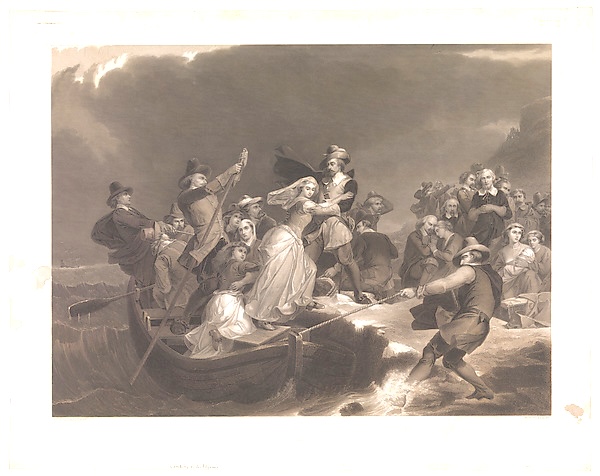
Popular culture remembers the Puritans as joyless scolds, suspicious of pleasure and hostile to passion. The stereotype is so entrenched that "puritanical" has become shorthand for prudishness. But read what they actually wrote about married love and a different picture emerges entirely.
Edmund Morgan, in his study of Puritan family life, found that the Massachusetts courts regularly punished couples who failed to show affection. A man named James Mattock was expelled from the First Church of Boston for refusing "ichnjugal fellowship unto his wife for the space of 2 years." The Puritans took the Song of Solomon literally, not allegorically.
"Let the husband render unto the wife due benevolence: and likewise also the wife unto the husband." --- 1 Corinthians 7:3, Geneva Bible (the Puritans' preferred translation)
Consider the letters of John and Margaret Winthrop, the first governor of Massachusetts and his wife. They are full of unguarded tenderness:
"My dear wife, I am verily persuaded God will bring some heavy affliction upon this land, and that speedily; but be of good comfort... I will not leave thee nor forsake thee."
Or this, from Margaret to John:
"I have many reasons to make me love thee, whereof I will name two: first, because thou lovest God; and secondly, because thou lovest me."
The Puritans were deeply suspicious of celibacy, which they associated with Catholic monasticism. They believed God designed human beings for partnership, and that to deny this design was a form of spiritual arrogance. Minister Thomas Hooker wrote that a husband's love for his wife should be like "a stream running into the ocean" --- constant, deep, and without reservation.
What does this say about modern society? We have inherited the caricature and lost the substance. The Puritans believed that eros and agape were not opposed but complementary --- that passionate love between spouses was a reflection of divine love. Our culture tends to separate the two: romance is entertainment, and religion is obligation. The Puritans would have found both reductions impoverished.
Perhaps the most surprising thing about the Puritans is not how different they were from us, but how much more integrated their vision of human life was. They did not compartmentalize. Love was love --- of God, of spouse, of neighbor --- and it was all one piece.